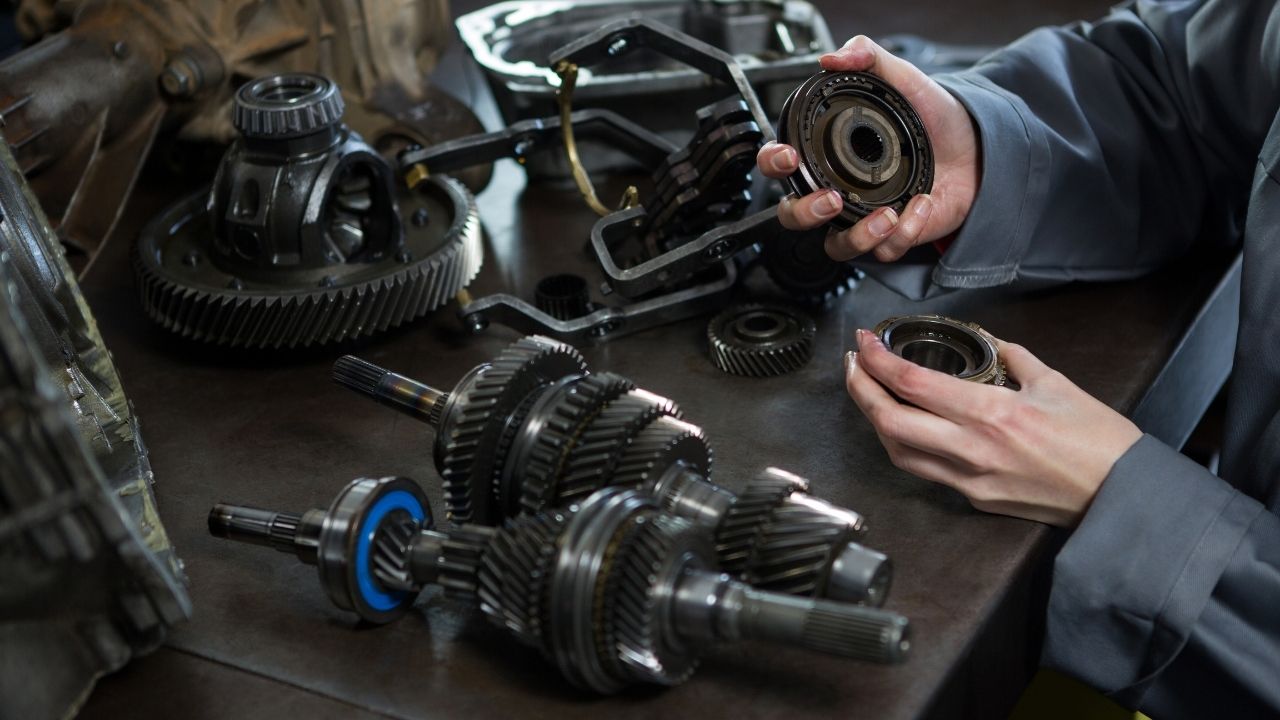
Overview of Precision Parts and Components Manufacturing
Precision parts and components manufacturing focuses on producing parts that meet exact design specifications, often down to the micron level. When you work with precision components, every dimension, surface finish, and material property matters; these parts play a critical role in industries where performance, safety, and consistency cannot be compromised. At Attri Tech Machines Pvt. Ltd., this manufacturing approach combines advanced machinery, skilled craftsmanship, and strict quality control to deliver dependable results every time.
Complex assemblies, high-load applications, and systems that require smooth, long-term operation often rely on precision manufacturing. Unlike conventional manufacturing, precision production emphasizes accuracy and repeatability across large batches. Each step, from design validation to final inspection, follows controlled processes aligned with global standards.
Modern precision manufacturing relies on CNC machining, advanced measuring instruments, and process automation. These technologies help achieve uniform quality while reducing waste and production time. Equally important is experience on the shop floor. Skilled professionals understand how materials behave during machining and how minor adjustments improve output quality.
When you choose precision components, you gain confidence in performance, durability, and compatibility. This manufacturing discipline supports industries such as automotive, aerospace, energy, and heavy engineering, where failure is not an option. Precision manufacturing forms the backbone of reliable industrial systems and enables innovation across global markets.
What distinguishes a precision part from standard parts?
A precision part differs from a standard part primarily in terms of accuracy, consistency, and performance expectations. Standard parts usually allow greater dimensional variation and are suitable for general-purpose applications. Precision parts, on the other hand, require extremely tight tolerances to ensure proper fit and smooth operation within assemblies.
When you handle precision components, every detail matters. Surface finish, geometry, and alignment directly influence how the part performs under load, speed, or pressure. Even a minor deviation can affect efficiency or cause premature wear. This level of accuracy demands advanced machinery, controlled environments, and skilled operators who understand process limits.
Precision parts also undergo rigorous inspection. Measurements involve coordinate measuring machines, gauges, and calibrated tools that verify compliance with design drawings. Standard parts may pass basic checks, while precision components require documented quality validation at each stage.
Another defining factor lies in application value. Precision parts are often used in mission-critical systems across automotive safety components, aerospace assemblies, and industrial machinery. These applications demand predictable performance over extended service life.
By choosing precision over standard components, you invest in reliability and long-term cost efficiency. Reduced downtime, fewer replacements, and stable system performance deliver measurable value. Precision parts represent engineering excellence built for demanding environments.
The historical evolution of precision components in industry
Precision components evolved alongside industrial progress. Early manufacturing relied heavily on manual machining and craftsmanship. Skilled machinists shaped components using lathes and milling machines, guided by experience and measurement tools that offered limited accuracy. Production volumes remained low, and consistency varied from batch to batch.
As industries expanded, demand for interchangeable parts grew. The Industrial Revolution introduced standardized measurements and mechanical tooling, thereby improving repeatability. Precision gained importance within sectors such as railways, defense, and mechanical engineering. Advances in metallurgy further enhanced component strength and durability.
The advent of numerical control machining signified a momentous shift. CNC technology transformed precision manufacturing by allowing programmed accuracy and repeatable results. Complex geometries became achievable without sacrificing consistency. Inspection methods also advanced, enabling tighter control over quality.
Today, precision components benefit from digital design, simulation, and automated inspection. Manufacturing integrates CAD/CAM systems, real-time monitoring, and continuous improvement practices. Global standards guide production, ensuring compatibility across international supply chains.
Understanding this evolution highlights why precision manufacturing remains essential. Each technological milestone has advanced accuracy, efficiency, and reliability, supporting modern industries that rely on dependable components for critical operations.
The Role of Precision Manufacturing in Modern Production
Precision manufacturing plays a central role in modern production by ensuring components perform exactly as designed. Industries now demand higher efficiency, lower emissions, and longer service life. Precision components help achieve these goals by optimizing fit, reducing friction, and ensuring consistent performance.
When production relies on precision, assembly processes become smoother. Components fit correctly without excessive adjustments or rework. This efficiency reduces production time and lowers overall manufacturing costs. Precision also supports automation, where machines require uniform parts to operate reliably.
Quality assurance forms a core element of precision manufacturing. Each process step follows documented standards, ensuring traceability and accountability. This approach supports compliance with international certifications and customer expectations.
Precision manufacturing also enables innovation. Engineers design advanced systems with confidence, knowing manufacturing capabilities can support complex requirements. Lightweight designs, compact assemblies, and high-strength components become achievable through precise control over dimensions and materials.
Precision manufacturing strengthens supply chain reliability. Consistent quality builds trust with customers worldwide and supports long-term partnerships. Precision remains a driving force behind industrial progress and global manufacturing excellence.
Key Characteristics: Tolerance, Fit, and Functionality
Tolerance, fit, and functionality define the foundation of precision components. Tolerance refers to allowable variation within specified limits. Tight tolerance ensures components maintain exact dimensions under real-world conditions. Precision manufacturing focuses on controlling these limits through advanced machining and inspection.
“Fit” describes how components assemble. Proper fit ensures smooth movement, correct load distribution, and reliable performance. Clearance fits, interference fits, and transition fits serve different functional requirements. Selecting the correct fit prevents vibration, leakage, or premature failure.
Functionality ties tolerance and fit together. Each component must perform a defined role within a system. Precision ensures alignment, balance, and operational efficiency. When tolerance and fit work together correctly, systems operate quietly, efficiently, and safely.
Material selection also influences these characteristics. Different materials respond uniquely to heat, stress, and wear. Precision manufacturing considers these factors during design and production.
By focusing on tolerance, fit, and functionality, precision components deliver consistent results across demanding applications. This disciplined approach supports reliability, safety, and long-term value within industrial systems worldwide.
Core Industries That Depend on Precision Manufacturing
Precision manufacturing is the backbone of modern industry. Across global markets, performance, safety, and reliability depend on components that are engineered with absolute accuracy. At Attri Tech Machines Pvt. Ltd., we work closely with industries where even the slightest deviation can impact productivity, safety, and long-term value. Below, we explore the core industries that rely heavily on precision manufacturing and why consistent quality matters at every stage.
Automotive and Mobility Systems
The automotive and mobility sector demands precision at every level. From engine components and transmission parts to suspension systems and safety-critical assemblies, accuracy directly affects performance, fuel efficiency, and passenger safety. In this industry, tight tolerances, repeatability, and material consistency are non-negotiable.
We understand that modern mobility systems are evolving rapidly. Electric vehicles, hybrid platforms, and advanced driver-assistance systems require components that meet exact specifications while supporting lightweight design and durability. Precision manufacturing ensures smooth operation, reduced friction, and longer service life, even under extreme operating conditions.
Our experience in automotive manufacturing focuses on delivering components that align with global quality standards and international compliance requirements. Advanced machining, robust quality checks, and process optimization help maintain consistency across high-volume production runs. Every component is manufactured with a clear focus on reliability and performance, ensuring seamless integration into complex vehicle systems.
By prioritizing precision, we help manufacturers reduce downtime, minimize recalls, and improve overall vehicle efficiency. This approach enhances product performance and strengthens trust across the automotive supply chain.
Aerospace and Defense Components
 Aerospace and defense manufacturing leaves no room for error. Components used in aircraft, defense equipment, and support systems must perform flawlessly under high stress, extreme temperatures, and challenging environments. Precision manufacturing plays a critical role in meeting these demanding conditions.
In this sector, accuracy ensures structural integrity, weight optimization, and operational safety. Even minor inconsistencies can affect balance, fuel consumption, or system reliability. Precision machining allows complex geometries and high-strength materials to be shaped with exact control, supporting both performance and safety requirements.
To meet the requirements of the aerospace and defense industries, we adhere to strict quality protocols, traceability practices, and process validation. Advanced manufacturing techniques, skilled craftsmanship, and continuous inspection help maintain compliance with international standards. We meticulously manage each stage of production, from selecting raw materials to the final inspection.
Our commitment to precision supports long service life, reduced maintenance cycles, and dependable performance. By delivering components that meet rigorous specifications, we contribute to safer operations and long-term reliability in aerospace and defense applications.
Hydraulic, Pneumatic, and Fluid Control Systems
Hydraulic and pneumatic systems rely on precision to function efficiently and safely. Valves, cylinders, manifolds, and connectors must maintain exact dimensions to control pressure, flow, and sealing performance. Any deviation can lead to leaks, pressure loss, or system failure.
Precision manufacturing ensures smooth internal surfaces, accurate fits, and consistent performance across operating cycles. These factors are essential for industries such as energy, heavy engineering, agriculture, and industrial machinery, where fluid control systems operate continuously under demanding conditions.
We focus on producing components that deliver reliable sealing, optimal flow control, and long-term durability. Advanced machining processes help achieve tight tolerances, while rigorous quality inspections ensure each component meets functional requirements. Material selection is handled carefully to support resistance to wear, corrosion, and high pressure.
By maintaining precision at every step, we help improve system efficiency, reduce maintenance expenses, and enhance operational safety. Reliable fluid control components play a vital role in maintaining productivity and preventing costly downtime across industrial environments.
General Engineering and Industrial Automation
General engineering and industrial automation depend on precision to ensure smooth, repeatable, and efficient operations. Components used in automated machinery, robotic systems, and production equipment must align perfectly to maintain speed, accuracy, and consistency.
Precision manufacturing supports seamless assembly, reduced vibration, and improved equipment lifespan. Accurate components help maintain alignment, reduce wear, and support high-speed operations in automated environments. This level of accuracy is essential for industries focused on productivity, scalability, and process optimization.
We work closely with engineering teams to manufacture components that integrate easily into complex systems. Advanced technology, skilled operators, and structured quality control help maintain consistency across diverse product ranges. Each component is designed to support reliable, continuous operation.
By delivering precision-engineered solutions, we help manufacturers achieve higher efficiency, better output quality, and long-term operational stability. Precision manufacturing remains a key driver of innovation and growth in modern industrial automation.
Materials Selection for Custom Precision Components
Choosing the right material is the foundation of every high-quality precision component we manufacture at Attri Tech Machines Pvt. Ltd. Material selection directly affects performance, durability, safety, and overall cost. When you understand how different materials behave under real working conditions, it becomes much easier to design components that perform reliably over time. In this section, we break down the key aspects of material selection in a clear, practical way, so even beginners can make informed decisions with confidence.
Metals, Alloys, and Specialty Materials
When manufacturing custom precision components, metals and alloys remain the most trusted choices due to strength, consistency, and long-term reliability. We commonly work with materials such as carbon steel, stainless steel, aluminum, brass, and alloy steels. Each metal offers unique advantages depending on the application. For example, carbon steel delivers excellent strength at a reasonable cost, while stainless steel provides corrosion resistance for harsh environments.
Alloys take performance a step further by combining metals to enhance specific properties, such as hardness, toughness, or heat resistance. Alloy steels are ideal for high-load, high-stress applications in the automotive, aerospace, and heavy engineering sectors. Aluminum alloys offer an excellent balance of strength and lightweight performance, making them popular in energy and industrial machinery.
Specialty materials, including tool steels, nickel-based alloys, and heat-resistant grades, are selected when standard materials cannot meet performance demands. These materials handle extreme temperatures, pressure, or wear without failure. While specialty materials may cost more, they often reduce maintenance, downtime, and replacement costs over time.
At Attri Tech Machines, we help you select materials that align with functional needs, operating conditions, and budget goals. We build every component on a material foundation you can trust, thanks to our experience across global industries.
Material Properties That Influence Performance
Understanding material properties is essential for building precision components that perform exactly as expected. Properties such as strength, hardness, toughness, ductility, and corrosion resistance determine how a component behaves under real-world conditions. When these properties are matched correctly to the application, performance and reliability improve significantly.
Strength is the maximum load a component can withstand without permanent deformation. Hardness affects resistance to surface wear and scratching, which is critical in moving or high-friction parts. Toughness allows a material to absorb shock and vibration without cracking, especially in heavy engineering and agricultural equipment.
Thermal properties also matter. Some materials expand or lose strength at high temperatures, while others remain stable. Corrosion resistance is critical for components exposed to moisture, chemicals, or outdoor environments. Selecting the wrong material can lead to premature failure, safety risks, and higher costs.
Machinability is another key factor. Materials that machine cleanly allow tighter tolerances and smoother finishes, which directly impact precision and performance. At Attri Tech Machines, we carefully evaluate all material properties before production begins. This approach ensures every component delivers consistent performance, meets global quality standards, and supports long-term operational success.
Selecting Materials for Wear and Load Resistance
Wear and load resistance are critical factors in components exposed to constant motion, pressure, or impact. Choosing the right material helps prevent surface damage, deformation, and unexpected breakdowns. For high-load applications, materials with high tensile strength and fatigue resistance are essential. Alloy steels and heat-treated grades are often ideal for gears, shafts, and load-bearing parts.
Wear resistance becomes significant in components that experience friction, abrasion, or repeated contact. Harder materials or surface-treated metals perform better in these conditions. Tool steels, hardened alloy steels, and coated materials can significantly extend component life. In some cases, surface treatments such as nitriding or carburizing add an extra layer of protection without altering the core material.
Balancing wear resistance with toughness is equally essential. A material that is too rigid may become brittle and fail under impact. That is why we evaluate operating loads, movement patterns, and environmental factors before finalizing material selection.
At Attri Tech Machines, we focus on real operating conditions rather than theoretical limits. By selecting materials designed for both wear and load resistance, we help you achieve longer service life, reduced maintenance, and dependable performance across demanding industries.
Material Trade-Offs: Strength, Weight, and Machinability
Every material decision involves trade-offs, especially between strength, weight, and machinability. Stronger materials often weigh more and can be harder to machine, increasing production time and cost. Lighter materials improve efficiency and energy savings but may require design adjustments to maintain strength.
For example, aluminum alloys offer excellent weight reduction and machinability, making them ideal for applications where efficiency matters. However, steel provides higher strength and load capacity, which is essential for heavy-duty components. Machinability also plays a significant role in achieving tight tolerances and consistent finishes. The materials the machine handles enable greater precision and faster turnaround times.
Cost is another consideration. High-performance materials may offer superior properties but increase material and processing expenses. The key is finding the right balance that meets performance requirements without unnecessary complexity.
At Attri Tech Machines Pvt. Ltd., we guide you through these trade-offs using real manufacturing experience and proven engineering knowledge. Our goal is to select materials that deliver optimal performance, efficient production, and long-term value, ensuring every precision component exceeds expectations from design to delivery.
Precision CNC Machining Technologies
Precision CNC machining sits at the core of what we do at Attri Tech Machines Pvt. Ltd. If you are new to manufacturing, CNC means Computer Numerical Control, where machines follow programmed instructions to create parts with extreme accuracy. This technology allows us to transform raw materials into high-performance components that meet tight tolerances and global quality standards.
We rely on advanced CNC machining technologies because modern industries demand consistency, speed, and reliability. Whether the requirement comes from automotive, aerospace, energy, or heavy engineering sectors, precision plays a critical role in product performance and safety. With CNC machining, every movement of the cutting tool is controlled by precise digital commands, reducing manual errors and ensuring uniform output across large production runs.
At our facility, state-of-the-art CNC machines work alongside skilled engineers who understand both design intent and practical manufacturing challenges. This combination allows us to handle complex geometries, tight timelines, and demanding export requirements with confidence. Precision CNC machining also supports continuous improvement by enabling process optimization, reducing material waste, and faster turnaround times.
Most importantly, this technology helps build trust. When you receive a component that fits perfectly and performs reliably in real-world conditions, confidence in the manufacturing partner naturally follows. That is why we invest heavily in CNC machining technologies to ensure every part reflects quality, durability, and engineering excellence from start to finish.
Role of CNC Turning and Milling in Complex Parts
 CNC turning and milling are vital to manufacturing complex components with precision and efficiency. If you imagine a component with detailed profiles, tight tolerances, or multiple features, manual machining cannot deliver the same level of accuracy and repeatability. This is where CNC turning and milling make a real difference.
CNC turning is ideal for round or cylindrical components. The workpiece rotates while the cutting tool shapes it with high precision. This process is widely used for shafts, bushings, and threaded parts where symmetry and surface finish matter. CNC milling, on the other hand, handles flat surfaces, slots, pockets, and complex contours. The cutting tool rotates as it moves in multiple directions to shape the material exactly as designed.
When these two processes work together, complex parts become easier to manufacture. We can now complete features that once required multiple setups in fewer steps, thereby reducing errors and saving time. This also improves dimensional accuracy and ensures consistent quality across batches.
At Attri Tech Machines, we use CNC turning and milling to meet demanding industry standards while keeping production efficient. The result is precision-engineered components that fit right the first time, perform reliably, and meet international expectations without compromise.
Advantages of NC Machining for Consistency and Repeatability
Consistency and repeatability are two of the most significant advantages of NC machining. For any manufacturing project, especially in export-focused industries, producing the same high-quality part repeatedly is critical. NC machining ensures that once a program is perfected, every component follows the same process without variation.
Unlike manual methods, NC machining relies on precise instructions that control speed, depth, and movement. This eliminates guesswork and reduces the risk of human error. Even during long production runs, accuracy remains stable, which is essential for components that must fit or function within larger assemblies.
Repeatability also supports cost efficiency. Less rework, reduced scrap, and predictable cycle times help keep production on schedule. This reliability builds confidence, especially when meeting strict quality audits and customer specifications.
At our manufacturing facility, NC machining supports quality control at every stage. Each part reflects the exact dimensions, finish, and performance characteristics. For you, this means dependable components that meet expectations every time, regardless of order size.
Multi-Axis Machining for Complex Geometries
Multi-axis machining opens the door to creating complex geometries that traditional machining cannot handle easily. Instead of moving along in just two or three directions, multi-axis CNC machines operate across four, five, or even more axes simultaneously. This allows intricate shapes to be machined in a single setup.
For components with angled surfaces, deep pockets, or compound curves, multi-axis machining improves precision while reducing handling time. Fewer setups mean fewer alignment errors and better surface finishes. This is especially important for aerospace, automotive, and energy applications where accuracy directly affects performance and safety.
Another key advantage is efficiency. By machining multiple faces in a single operation, production time decreases while quality improves. Tool access becomes easier, and complex features are produced with greater control. At Attri Tech Machines, multi-axis machining enables the delivery of advanced solutions without compromising strength or accuracy. It allows us to meet challenging design requirements while maintaining tight tolerances and consistent quality across every component.
Integrating CAD/CAM for Accurate Production
Integrating CAD and CAM systems is crucial to achieving accurate, efficient production. CAD, or Computer-Aided Design, allows engineers to create detailed digital models of components. CAM, or Computer-Aided Manufacturing, then converts those designs into precise machining instructions.
This integration ensures that what gets designed is precisely what gets produced. Design errors are identified early, reducing costly changes later in the process. Tool paths are optimized to improve surface finish, reduce machining time, and extend tool life.
For beginners, think of CAD/CAM as a digital bridge between ideas and reality. Every dimension, curve, and tolerance flows seamlessly from design to machine. This level of control improves consistency and supports high-quality output across batches. At our facility, CAD/CAM integration enhances collaboration, accuracy, and productivity. It allows us to deliver components that meet international standards while maintaining transparency and trust throughout the manufacturing process.
Sheet-Metal and Secondary Processes
Sheet metal is the backbone of many industrial components, from automotive panels to machinery housings. It’s versatile, durable, and can be shaped into precise forms to meet specific functional needs. Working with sheet metal starts with selecting the right type and thickness for the job. Mild steel, stainless steel, and aluminum are the most common options, each offering unique advantages in strength, corrosion resistance, and weight.
Secondary processes are the finishing touches that turn raw sheet metal into a functional part. These include cutting, punching, bending, and surface treatments. Each step is designed to improve performance, appearance, and longevity. For instance, surface treatments like powder coating or galvanizing protect metal parts from rust and wear, which is critical for parts exposed to harsh environments.
Understanding sheet metal and secondary processes isn’t just about machines; it’s about precision and planning. Proper layout, measurement, and alignment ensure parts fit perfectly in assemblies. Even minor errors during bending or cutting can lead to issues in the final product.
In industries such as automotive, aerospace, and industrial machinery, sheet-metal components often operate under stress or extreme conditions. That’s why combining advanced technology with skilled craftsmanship is essential. With modern tools, CNC machines, and skilled operators, it’s possible to achieve tight tolerances and consistent quality.
At its core, sheet-metal fabrication is about transforming flat metal into a functional, reliable product. With attention to detail and proper techniques, the results are parts that not only perform well but also last long, providing a strong foundation for high-quality assemblies.
Sheet-Metal Forming and Fabrication Essentials
Forming and fabricating sheet metal is both an art and a science. It starts with understanding the properties of the metal, its thickness, ductility, and hardness. These factors determine which forming techniques will work best and the force required to shape the material without cracking or weakening it.
Fabrication usually begins with cutting the sheet metal to the desired size. Standard cutting methods include shearing, laser cutting, or water-jet cutting. Each method has its advantages. For example, laser cutting offers precision and smooth edges, while shearing is fast and cost-effective for simple shapes.
Once cut, forming techniques like bending, rolling, and stamping shape the metal. Bending is often done using press brakes, where the sheet is pressed between a punch and die to create angles or curves. Rolling transforms flat sheets into cylindrical or curved forms, which are common in tanks and pipes. Stamping is ideal for high-volume production, enabling quick, consistent part production.
Fabrication isn’t complete without finishing touches. Deburring removes sharp edges, while treatments like painting or coating add durability and aesthetic appeal. Attention to accuracy is key; small misalignments in bending or stamping can affect the assembly and function of the final product.
The essentials of sheet-metal forming and fabrication lie in the balance among precision, material knowledge, and proper use of machinery. When done right, it ensures parts are strong, reliable, and ready for assembly into complex machinery or products.
Power Press and Slotting Operations
Power presses and slotting operations are critical tools in shaping and cutting metal components. A power press uses mechanical or hydraulic force to punch, bend, or shear sheet metal. It works like a strong, precise stamp, creating holes, shapes, or even complex designs efficiently. These operations are ideal for high-volume production where consistency is crucial.
Slotting, on the other hand, involves cutting keyways or slots into metal parts. These slots are often necessary for assemblies where gears, shafts, or other components must fit perfectly. Slotting machines ensure these cuts are precise, reducing wear and improving the final product’s performance.
Safety and accuracy are paramount in both operations. Operators must ensure correct alignment, proper tooling, and adequate material support to prevent accidents and maintain part quality. Advanced power presses today often come with CNC controls, allowing for automated, repeatable precision that reduces errors and increases efficiency.
These processes are widely used in the automotive, industrial machinery, and energy sectors. They allow complex parts to be produced quickly without compromising strength or functionality. Combining power press and slotting techniques with skilled craftsmanship ensures that even the most demanding designs are achievable. These operations bridge the gap between raw sheet metal and ready-to-use components, enabling reliable, precise, and high-quality manufacturing outcomes.
Welding, Bending, and Assembly Techniques
Welding, bending, and assembly are the finishing steps that bring metal components together into functional structures. Welding joins metals by melting and fusing them, creating strong, permanent connections. Techniques like MIG, TIG, and spot welding each have their uses depending on the material and part design. Choosing the correct welding method ensures durability and structural integrity.
Bending is the process of shaping sheet metal into angles or curves. Press brakes or manual bending tools create precise forms that fit perfectly in assemblies. Even minor inaccuracies during bending can cause misalignment, so attention to detail is essential.
Assembly combines these parts into complete products. Fasteners, rivets, or adhesives may be used alongside welded joints to create structures that are both strong and functional. Testing and inspection during assembly ensure that the final product meets safety and quality standards.
These techniques are widely applied across automotive frames, machinery housings, and heavy equipment. They require not just equipment but also expertise to balance strength, flexibility, and precision. Good welding, bending, and assembly practices result in parts that last longer and perform reliably under stress. Ultimately, these processes turn individual components into usable, high-quality products. By focusing on accuracy, proper technique, and quality control, manufacturers can deliver parts that exceed expectations every time.
Combining Machining and Sheet-Metal for Functional Parts
Combining machining and sheet-metal work creates parts that are both strong and precise. Sheet metal provides shape and flexibility, while machining adds exact dimensions, holes, or complex geometries that sheet metal alone cannot achieve. This combination is common in automotive components, industrial machinery, and energy equipment.
The process begins with fabricating the basic shape from sheet metal. Then, machining operations such as drilling, milling, or turning add features, including holes, slots, and threads. This ensures parts fit perfectly in assemblies and perform reliably. Precision is key; machined features must align perfectly with the bent, stamped, or formed sheet metal.
This combination also allows for cost-efficient production. Sheet metal provides bulk material at a lower cost, while machining refines the part only where necessary, saving time and resources. The result is a functional part that balances strength, weight, and performance.
Additionally, quality control at every stage ensures reliability. Inspections check that dimensions, tolerances, and finishes meet strict standards. Advanced technologies like CNC machining and automated inspection tools make this process even more precise.
By integrating sheet-metal fabrication with machining, manufacturers can produce parts that are ready for real-world applications. The approach combines the best of both worlds: the versatility of sheet metal and the accuracy of machining, resulting in functional, durable, and high-performance components.
Why Choose Attri Tech Machines for Custom Precision Parts and Components Manufacturing Solutions
When it comes to manufacturing precision parts, consistency, accuracy, and reliability are non-negotiable. That’s where Attri Tech Machines comes in. Our commitment is simple: deliver high-quality, custom-engineered components that meet our clients’ exact needs. We don’t just produce parts; we create solutions tailored to your industry requirements.
Choosing us means tapping into decades of experience in precision engineering and manufacturing. From automotive and aerospace to heavy engineering and industrial machinery, our solutions are trusted worldwide across a variety of sectors. Our skilled team combines technical expertise with hands-on experience to handle even the most complex designs.
What sets us apart is our focus on innovation and technology. We leverage advanced CNC and NC machines, along with state-of-the-art sheet-metal facilities, to produce components with exceptional accuracy and repeatability. This means your parts are not only built to specification but are also consistent, reliable, and ready for immediate application.
We understand that timelines and quality control are critical. That’s why every component passes through multi-stage quality checks to ensure it meets international standards. On-time delivery isn’t a goal; it’s a guarantee.
Ultimately, choosing Attri Tech Machines means partnering with a company that prioritizes your success. From initial design consultation to final delivery, every step is handled with precision, care, and a focus on exceeding expectations. With us, you’re not just buying parts; you’re investing in long-term reliability and performance.
Proven Expertise in Precision Engineering and Custom Parts
Precision engineering isn’t just about machines; it’s about knowledge, skill, and experience. At Attri Tech Machines, we have decades of proven expertise in designing and manufacturing custom components that meet the strictest tolerances. A deep understanding of material properties, industry standards, and practical application requirements backs every project we take on.
Our team specializes in translating complex designs into real-world components that perform flawlessly. Whether it’s a one-off prototype or a high-volume production run, we ensure that every part meets its exact specifications. Our engineers and machinists work closely together, combining technical know-how with hands-on experience to solve even the most challenging manufacturing problems.
This expertise extends across industries. From aerospace components that demand extreme precision to industrial machinery parts that must withstand heavy wear, we deliver solutions that stand up to real-world conditions. Every part is designed and manufactured with accuracy, reliability, and durability in mind. With our experience, you can trust that your parts will not only fit perfectly but will also perform consistently throughout their lifecycle. Proven expertise means fewer errors, reduced waste, and parts that deliver on every promise.
Advanced CNC, NC, and Sheet-Metal Manufacturing Infrastructure
High-quality parts require high-quality tools. At Attri Tech Machines, we invest in advanced CNC and NC machines that deliver unparalleled precision. These machines allow us to produce components with exact dimensions and complex geometries, consistently and efficiently. Automated controls ensure accuracy, while modern software enables quick adaptation to new designs.
Our sheet-metal facilities complement our machining capabilities. From bending and forming to punching and welding, we can fabricate components that are not only precise but also robust. This combination of machining and sheet-metal expertise gives us the flexibility to handle a wide range of part designs, from simple to highly complex.
Our infrastructure is designed for efficiency and scalability. We can handle both small prototype runs and large-scale production without compromising quality. Every machine is regularly maintained and calibrated, ensuring reliability throughout manufacturing.
By leveraging advanced infrastructure, we reduce errors, improve turnaround times, and maintain consistent quality across batches. This investment in technology translates directly into better results for clients, whether the requirement is a single custom component or a large production run.
Strict Multi-Stage Quality Assurance and Delivery Reliability
Quality isn’t optional; it’s the foundation of everything we do. At Attri Tech Machines, every component undergoes strict multi-stage quality checks. From raw material inspection to final dimensional verification, each part is examined to ensure it meets or exceeds international standards.
We use modern measurement tools and techniques, including coordinate measuring machines (CMMs), gauges, and visual inspections, to ensure precision. Our quality processes catch potential issues early, preventing defects and ensuring reliable, long-lasting parts.
On-time delivery is equally important. We plan production schedules meticulously to meet client deadlines without compromising quality. Clear communication, proactive planning, and strong logistics management mean that your parts arrive when promised.
This commitment to quality and delivery reliability gives clients confidence that they are receiving components they can trust. It also minimizes downtime, supports operational efficiency, and strengthens the performance of the systems in which our components are used.
Customer-Focused Solutions Tailored to Industry Requirements
Every industry has unique requirements, and every client has specific goals. At Attri Tech Machines, we focus on understanding those needs and delivering solutions that fit perfectly. Whether it’s a precision-engineered part for aerospace, a high-strength component for heavy machinery, or a corrosion-resistant assembly for energy applications, we design and manufacture with your requirements in mind.
We start by understanding your project, your application, and your challenges. Then, we use our technical expertise and manufacturing capabilities to create components that are functional, durable, and cost-effective. Our team is always available to discuss modifications, offer suggestions, and adapt to changing project needs.
Customer-focused solutions go beyond meeting specifications. It means building parts that add value, reduce maintenance, and improve overall system performance. By combining technical excellence with personalized service, we ensure that each project achieves the results our clients expect and often exceeds them. With Attri Tech Machines, you get more than components; you get a manufacturing partner committed to your success, quality, and satisfaction every step of the way.